by Polly Packer
MATERIALS
- Rubber duckies (or stress balls)
- 12, 3, 6, 9 cards
- Pictures of each of the poses
- Pictures of each animal (turtle, fish, frog, monkey, owl, elephant, ear, cat, cow, stork, camel,
lizard) - Chimes
- Yoga timer
- Sign that says “how do I feel as this animal?”
- Soft nature music with frogs, drums and guitar
SHORT DESCRIPTION/TOPIC
The concept of bridging everyone together is threaded throughout the lesson to remind the students that we are all like one-another in ways and have a common goal of peace, love and friendship. Little tokens of information about the connections that birds have will be incorporated throughout the class.
CONNECTING CIRCLE
Swim Ducky Swim – This is a 3-part breath. First, breath into the belly. Then to the rib cage and lastly, to
the heart. On the exhale, focus on releasing the breath from the heart, to the rib cage, then out through the
belly. Quiet Quests
POSES AS PATHWAYS
Eyes Around the Clock – Place 4 numbers (12,3,6,9) in the shape of a clock on the wall). Cuckoo
birds feed on insects and their favorite food is a hairy caterpillar. Imagine you are a cuckoo bird
looking for insects and caterpillars. Guide students on the inhale and exhale to look at the time
numbers on the clock moving clockwise. Ecological Echoes, Quiet Quest, Math Medley
Elephant Ears – Did you know that oxpeckers are one type of bird that land on elephants and feed
off the insects off their backs and bodies? This is called a symbiotic relationship, where both
animals benefit. Ecological Echoes
Moo and Meow – Inhale the right arm straight and extend the left leg out behind. Brain Balance
Chicken/Rooster or Charlie Parker’s “Bird” Walk – Birds have hollow bones that help them fly;
humans have 206 strong bones that help give us support. Ecological Echoes, Awesome Anatomy
Ragdoll – There is a breed of cats call the Ragdoll, and they are large, laid-back, semi long haired
cats with captivating blue eyes. Allow for the phalanges (toes) to lift up and down. Feel rooted in
the heels, legs, pelvis, torso, and shoulders. And bring your cranium (head) to the clouds!
Ecological Echoes, Awesome Anatomy
Roll-Ups – Show students how big an inch is using the ruler. The spine has 24 vertebrae, along
with 8-10 fused vertebrae in the sacrum: 5 (fused) and coccyx. Roll up the spine, one inch at a
time. Awesome Anatomy, Math Medley
Untying the Knots – Our muscles get very tight and sometimes painful if we spend too much time
on the computer or phone because we round our shoulders and drop our neck. Awesome
Anatomy
Shake like Jelly – Play with alliteration. Such as “Hehe goes the head,” “nice and easy to the
neck,” “sunny shoulders rise to the sky.” Laughing Language
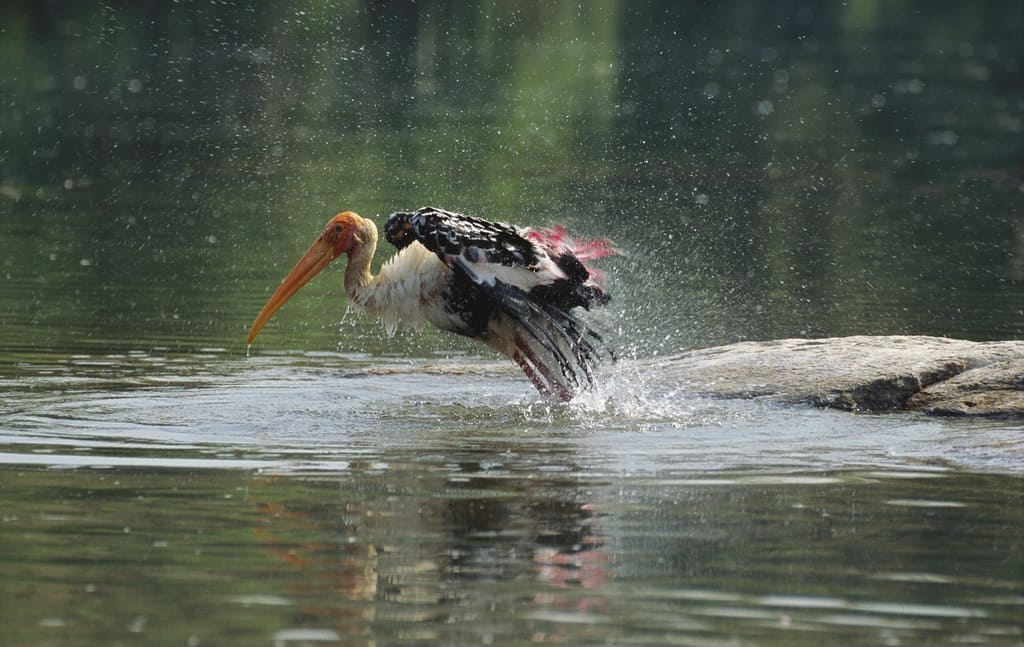
Stork – Gaze at a focus friend for 3-5 breaths. Quiet Quest
Dromedary Delight – The ostrich is known as the camel-bird, for it looks so much like a camel!
The Ostrich is the largest bird in the world and the fast runners of any birds or other two-legged
animal and can sprint at over 43 miles (70 km) an hour. Ecological Echoes, Math Medley
Down Diggity Doggie Down – Have one child come up with a unique bark and ask the rest of the
class to follow. Laughing Language
Up Uppity Doggie Up – Have your dog howl at the moon! A German Shepherd guide dog led her
blind companion the entire 2100 mile Appalachian Trail which spans from Springer Mountain in
Georgia to Mount Katahdin in Maine. Ecological Echoes, Math Medley, Poses as Pathways
Transformer Series (Lizard to Alligator) – Alligators and birds are part of the same larger group,
called archosaurs, which has existed for 250 million years and which has given rise not only to
birds and crocodilians, but also to dinosaurs. Ecological Echoes
Tree Frog– Frogs are a delicious treat for some birds to eat. Ecological Echoes
Talking Turtle
Bubble Fish
Seal
Monkey See Hear and Speak – Begin by counting the breath. Inhale up to five seconds and hold
for 2 seconds; exhale for 5 seconds. Students can use the rubber ducky to squeeze to release
tension. Quiet Quests
MUSICAL MUSINGS
Play nature music throughout the class.
VISUAL VIGNETTES
Write the following quote on a piece of paper for each student: “A bird does not sing because it has an
answer, it sings because it has a song.” Have the students draw a bird on their paper.
QUIET QUEST
Swim Ducky Swim
CLOSING CIRCLE
Fountains of Oms